
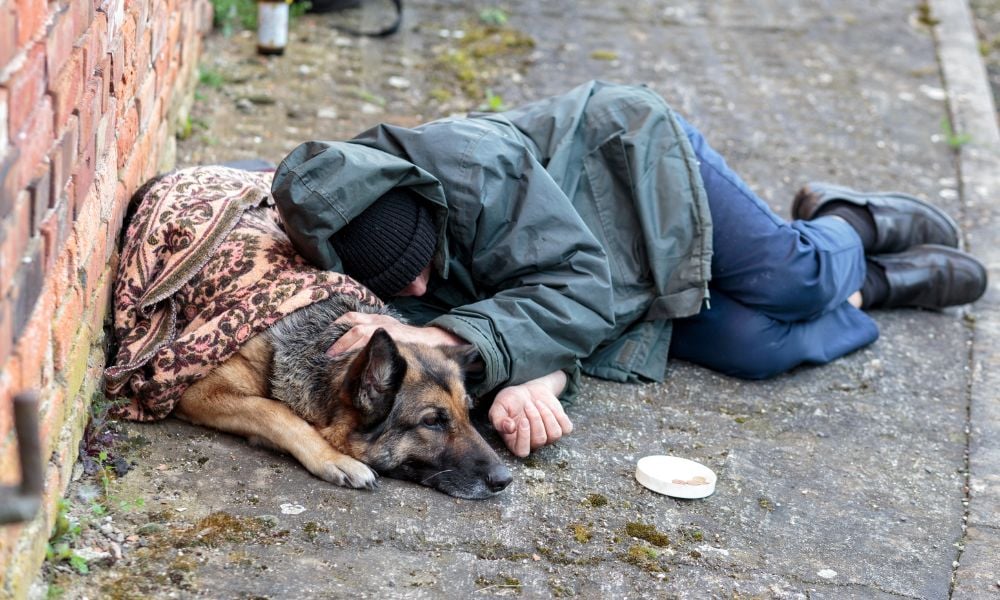
For years in Anchorage, Alaska, unhoused residents faced a difficult choice: give up their companion animal, or remain on the street. Now, two out of the three city-run shelters welcome animals, Alaska Public Media reported earlier this month.
One of those shelters, Linda’s Place, has a dedicated pet room. Past guests have included dogs, cats, and even a ferret. A 2023 survey by the Anchorage Coalition to End Homelessness confirmed the scale of the problem: pets were one of the main reasons people chose the street over a shelter bed.
This problem isn’t unique to Anchorage. Having a companion animal is a common barrier to shelter access across the country, and shelters that accept animals remain the exception rather than the rule.
Research has long shown how much these animals mean to their people. University of Colorado sociologist Leslie Irvine’s book, “My Dog Always Eats First,” is based on interviews with more than 70 unhoused pet guardians across four U.S. cities. The title comes from what she heard again and again: the dog gets fed before the human does. A recent University of Southern California study of California’s pet-friendly shelter program found the approach also helps people move into permanent housing.
Policies like Anchorage’s don’t just help animals, they also remove a major barrier to shelter access. This makes it easier for more people to come inside, stay with the companions they love, and begin the work of finding a permanent home.
Help make pet-friendly shelters the standard everywhere: Please sign our petition asking Congress to pass the Providing for Unhoused People with Pets (PUPP) Act.