Jane Goodall, the pioneering primatologist whose work with wild chimpanzees forever changed how humans see the natural world — and whose tireless advocacy inspired generations to fight for animals and the planet — has died at the age of 91, according to the Jane Goodall Institute.
All of us at Lady Freethinker mourn her passing while celebrating the unparalleled impact she made for animals and all life across the globe.
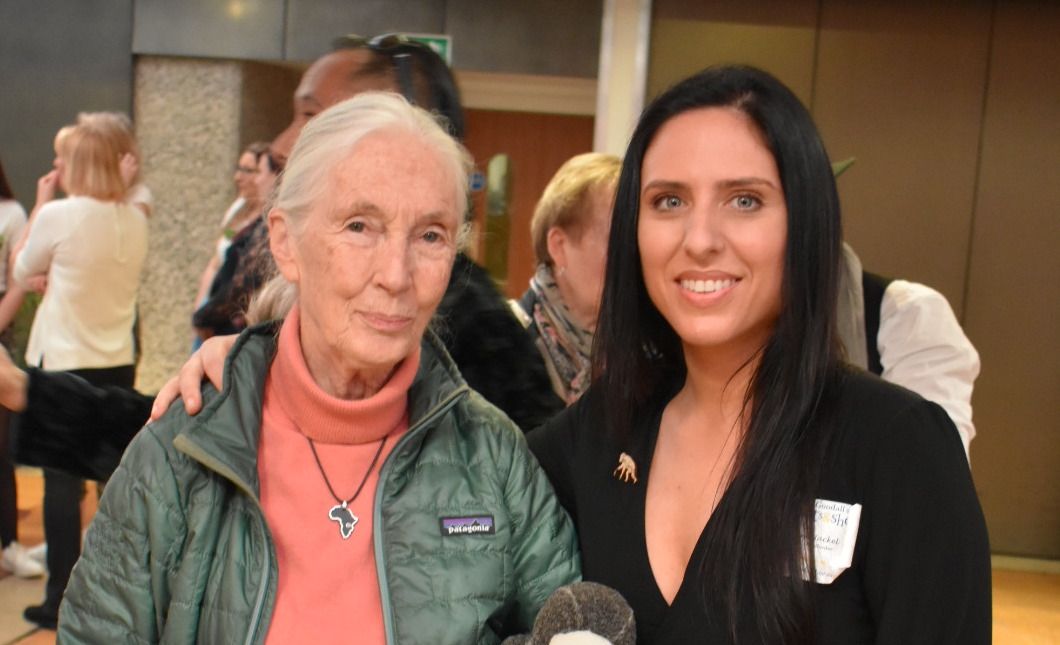
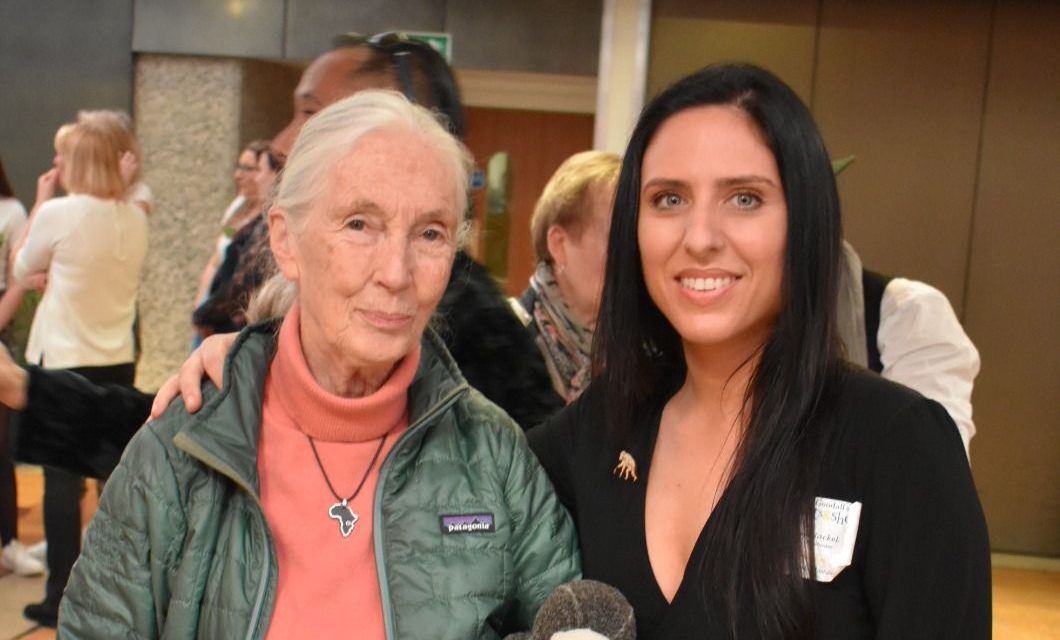
“Jane Goodall paved the way for all of us working today to help animals and protect them from suffering. She showed the world that every animal is an individual, and that many are capable of cleverness and sensitivity once assigned only to humans,” said Lady Freethinker Founder Nina Jackel. “I feel incredibly fortunate to have met her, and know that her legacy will be felt for generations to come.”
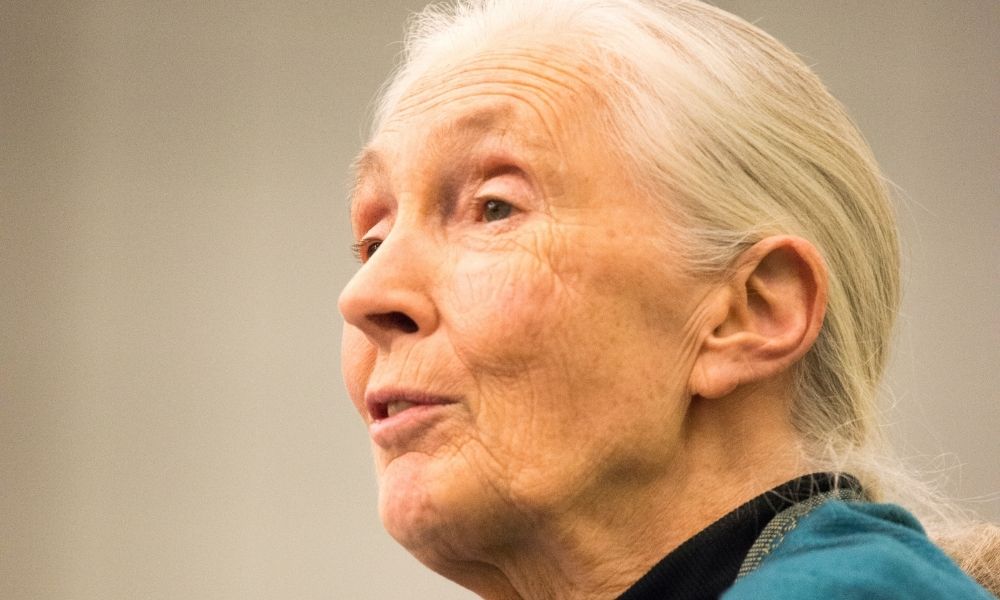
Goodall first rose to prominence in the 1960s for her pioneering field studies in Tanzania’s Gombe Stream National Park, where she overturned long-held scientific assumptions by showing that chimpanzees not only make and use tools, but also share food, form bonds, and display unique personalities. At a time when most researchers refused to even name the animals they studied, Goodall insisted on recognizing each individual as a sentient being.
(Kelleher Photography/Shutterstock)
Her fascination with animals began in childhood. At just four years old, Goodall wandered into a henhouse on a farm near her home in England and quietly waited to see how a hen laid an egg. When her frantic mother finally found her — Jane had been missing for so long that she’d reported it to the police — she listened patiently to her daughter’s excited observations rather than scolding. Goodall later said that moment, and specifically her mother’s willingness to nurture her curiosity rather than suppress it, helped set her on the path that defined her life.
After decades spent studying chimpanzees in the wild, Goodall’s career took a profound turn in 1986 when she attended a conference in Chicago and watched a disturbing film of laboratory experiments on animals. From that moment, she began to more intentionally broaden her life’s work of observation and discovery to focus on global advocacy for animal protection and conservation. “I went to the conference as a scientist, and I left as an activist,” she said in a TED conversation.
In the decades that followed, Goodall became perhaps the world’s most visible and effective voice for animals. She founded the Jane Goodall Institute and launched Roots & Shoots, a youth-driven program now active in more than 60 countries, which empowers young people to take action for animals, people, and the environment. She traveled the globe tirelessly — averaging 300 days a year on the road — urging audiences to protect endangered species and reconsider their relationship with the natural world, and campaigning against the use of animals in medical research and zoos.
Goodall’s influence reached far beyond the scientific community. She received countless honors over the course of her extraordinary life, including the Templeton Prize, the French Legion of Honor, and the U.S. Presidential Medal of Freedom. She was also named a United Nations Messenger of Peace in recognition of her lifelong dedication to animals and the planet. She published numerous books, including the bestselling autobiography “Reason for Hope,” as well as many aimed at educating and inspiring children.
(vitrolphoto/Shutterstock)
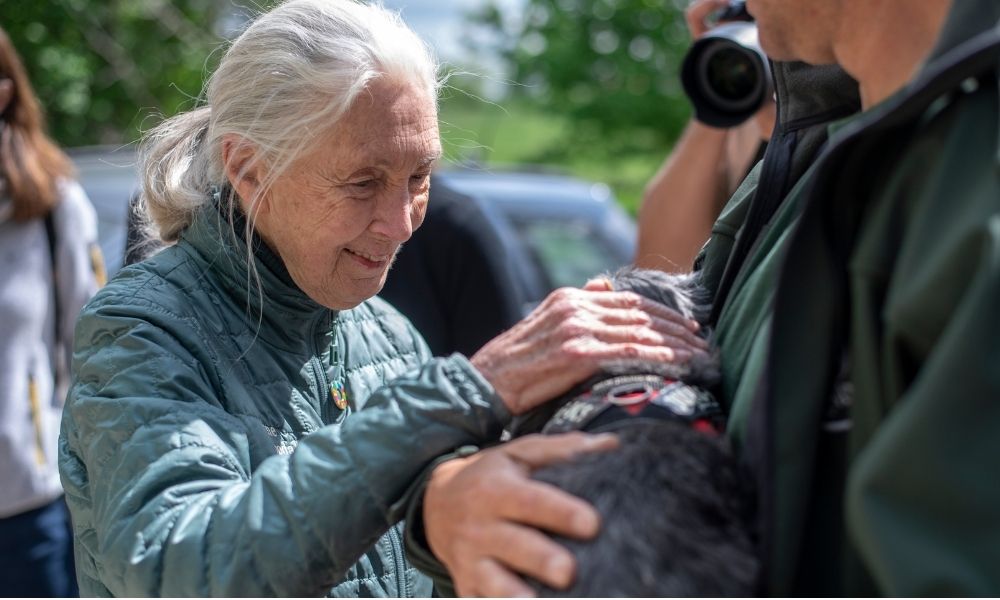
Her work mattered deeply to animal advocates not only because of her essential research and discoveries, but because of her unwavering compassion. Goodall spoke against factory farming, wildlife trafficking, and the exploitation of animals in entertainment. She urged people to see the connections between their everyday choices — like what they eat and buy — and the survival of other species. “What you do makes a difference,” she famously reminded us, “and you have to decide what kind of difference you want to make.”
Lady Freethinker joins the global community in mourning this monumental loss. Jane Goodall leaves behind not only an incredible body of scientific knowledge and understanding, but also a legacy of empathy and action that will continue to inspire.