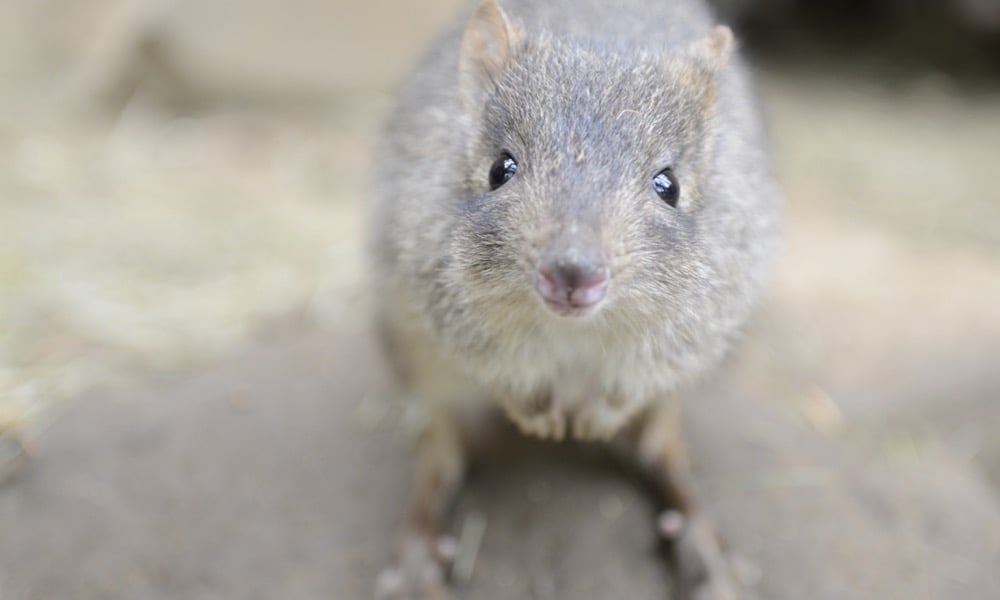
For the first time in more than a century, critically endangered woylies are hopping through the scrub of Wirruwana in Western Australia. Woylies are small, nocturnal marsupials native to Australia that are the size of a rabbit, but hop around like kangaroos. They curl their strong tails around bundles of grass and twigs, gathering what they need to build their nests, while females carry joeys in their pouches. Together, these are welcome signs that woylies are settling in and a new generation is taking shape on the island.
The return began in April 2025, when conservation teams from Western Australia’s Department of Biodiversity, Conservation and Attractions released 180 woylies, a type of bettong, across the island after dark. Another 58 young made the journey inside their mothers’ pouches. The woylies came in equal numbers from three genetically distinct wild populations in southern Western Australia, giving their new island population a broad genetic foundation.
Moving the woylies was only one part of bringing them back. Wirruwana, also known as Dirk Hartog Island, underwent dramatic ecological changes after people brought goats, cats, foxes, and other nonnative animals there. Their presence altered native vegetation and placed additional pressure on woylies and other native wildlife.
The woylies are among the native species being brought back through the Return to 1616 project, which takes its name from the year Dutch sea captain Dirk Hartog landed on the island. Conservationists are working to restore Wirruwana’s habitats and native wildlife to something resembling the ecosystem he encountered, before introduced animals transformed the landscape.
Even the menu had to be checked. Fungi are an important part of a woylie’s diet, and years of damage to the island’s vegetation meant conservationists could not assume enough food remained.
Researcher Rebecca Quah analyzed fungal DNA in scat from mainland woylies to identify what the marsupials were eating. She then compared that DNA profile with fungi found in Wirruwana’s soil to determine whether the island could provide enough of their natural food. The comparison offered a hopeful sign for the returning woylies.
Wirruwana is home to 75 types of fungi with visible fruiting bodies, and the island contains roughly half of the fungi woylies and boodies, another type of bettong, are known to eat. Boodies are the woylies’ small, social, nocturnal burrowing relatives. Their name comes from the Noongar language, and they create elaborate underground warrens with as many as 91 entrances.
Other native mammals have also been found sheltering in boodie burrows. When boodies arrive, they will join woylies in turning the soil and helping Wirruwana’s native vegetation recover.
The first weeks brought a painful setback, however. Eleven of the 22 radio-collared woylies died within 12 days of release.
The timing was meant to avoid the worst of the summer heat, but during the week before release, maximum temperatures on Wirruwana ran about 13°F (7°C) above the average maximums from the previous five years. On several release days, temperatures topped 98.6°F (37°C). The combination of heat, drought-dried vegetation, and the strain of translocation likely contributed to the losses, the official monitoring report concluded.
A few weeks later, the first rains of May brought a turning point. As winter rain followed in June, surviving woylies began regaining weight. No further deaths were recorded among those wearing radio collars after the difficult first weeks, and follow-up monitoring showed the woylies were finding enough food and beginning to raise young. A remote camera also captured a woylie curling their strong, prehensile tail around grass and twigs for a nest, a rare glimpse of a nocturnal woylie settling into life on the island.
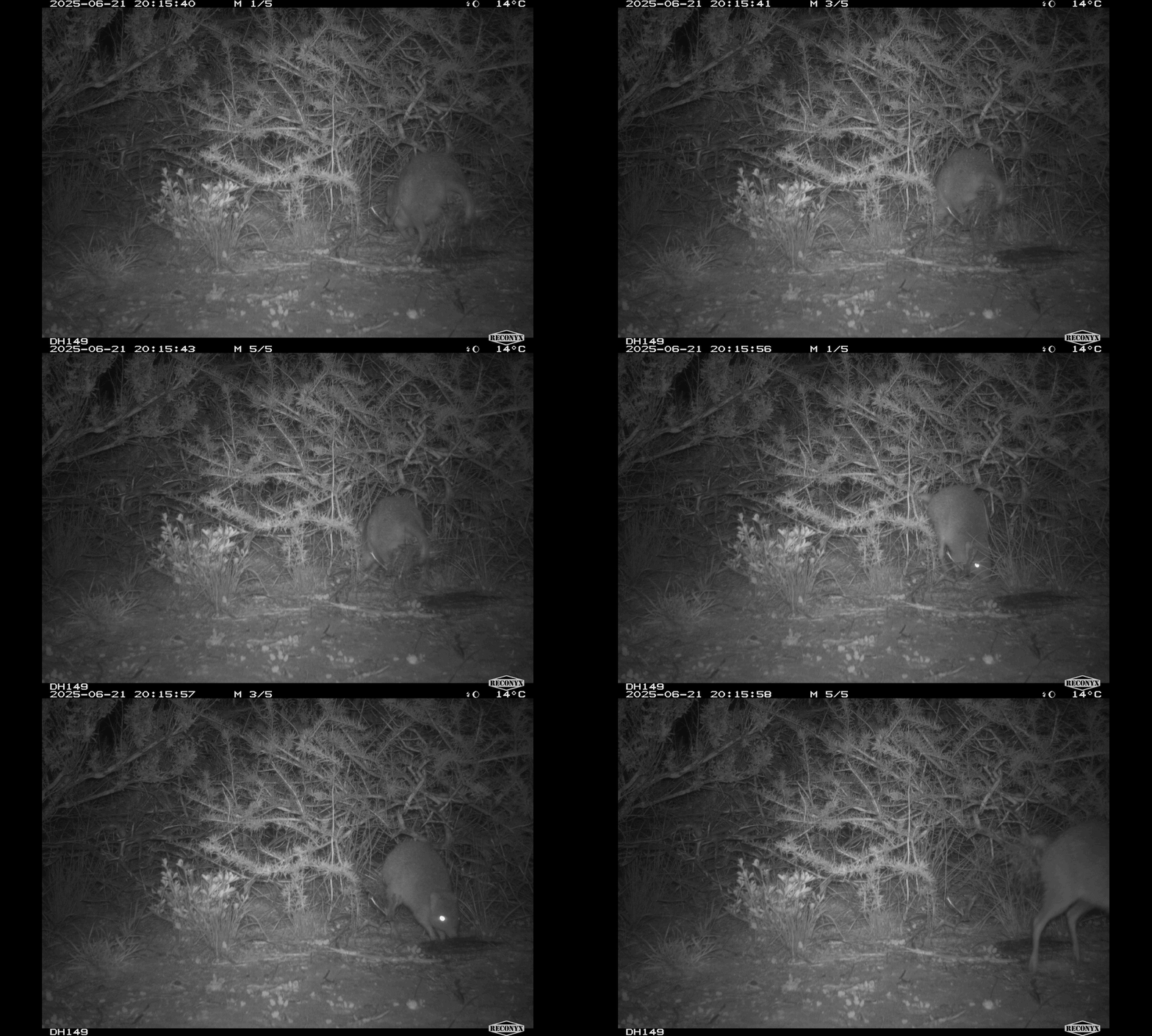
A Woylie Moving Through Scrub on Wirruwana at Night (Images: © Western Australian Department of Biodiversity, Conservation and Attractions; used with permission for this article)
By the final monitoring session in late October, all collars had been removed from healthy woylies who were settling into their new island home. Monitoring teams had checked on 46 of the founding woylies, and more than 90% of the females checked were carrying joeys, according to DBCA’s Summer 2026 update. Those follow-up checks also found three Wirruwana-born woylies, new recruits from the island itself.
Each woylie also leaves a mark on the landscape. While foraging for fungi, seeds, and tubers, a single woylie can dig hundreds of small pits in one night, aerating the soil, spreading spores, and helping plants grow.
For now, the woylies are digging, nesting, and carrying young across Wirruwana. After more than a century away, woylies are helping bring the island back to life, one tiny joey at a time.