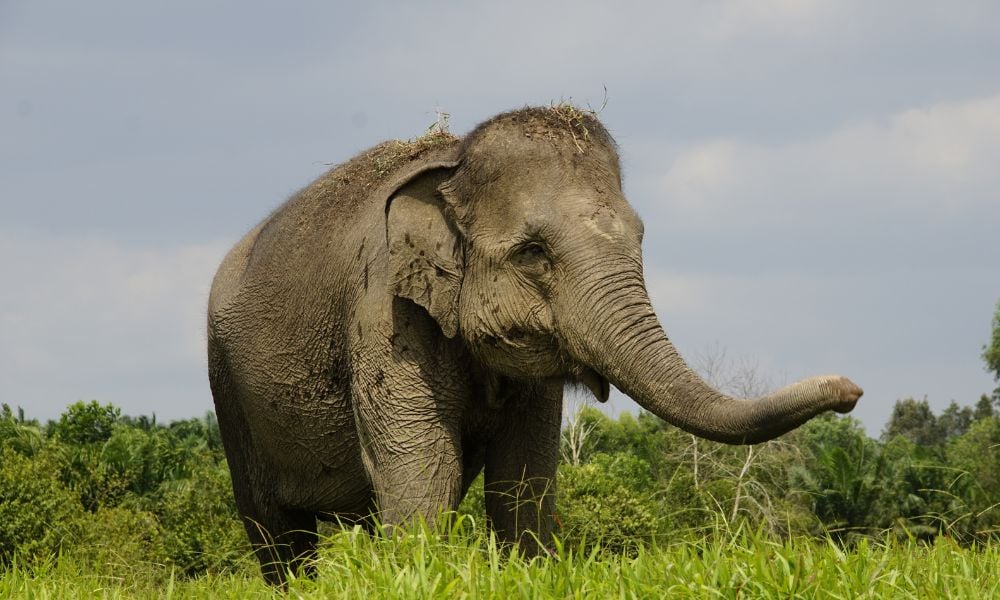
The famous Bali Zoo has announced that it will end elephant rides, marking an important step forward for animal welfare in Indonesia.
The decision, effective as of Jan. 1, follows a December 2025 directive from Indonesia’s Ministry of Forestry requiring licensed conservation institutions to terminate elephant riding programs, in line with strengthened animal welfare standards.
These developments signal a shift away from practices that have long prioritized entertainment over animal well-being. We hope they will encourage more zoos and tourist attractions to follow suit by ending other exploitative activities.
Bali Zoo is estimated to house 14 elephants. Many of them are Sumatran elephants, a critically endangered subspecies that has been widely exploited for tourism across the region. Elephant rides are often marketed to visitors as ethical or cruelty-free experiences, but the reality of the animals’ suffering has been repeatedly exposed and well-documented in Bali and beyond.
Elephants used for rides are typically subjected to training methods that suppress natural behaviors. They are required to carry heavy loads that strain their spines and joints, and are confined in conditions that severely limit movement, social interaction, and mental stimulation.
While these activities are presented as harmless or even educational, they result in lifelong physical and psychological suffering for these highly intelligent and sensitive creatures.
This decision by Bali Zoo and the directive from the Ministry of Forestry show that practices which were once widely accepted – and that normalized exploitation as entertainment – are now being questioned and changed.
It also reflects growing public awareness of the realities behind captive wildlife attractions, and increasing concern for animal welfare, demonstrating that meaningful policy reform is possible when exploitative practices are no longer tolerated by the public or by those in positions of power.
Sadly, elephant rides are just one example of a much broader problem of exploitation within wildlife tourism. The suffering it causes is often hidden from view.
Behind the scenes, animals used in tourist attractions are frequently confined in cages, restrained with chains, or subjected to punishment-based training methods such as bullhooks, food deprivation, and forced separation from their families. All of this is meant to make them more compliant for human interaction and entertainment.
Animals used for photo opportunities, close-contact encounters, or other interactive experiences often endure chronic stress, injury, and lifelong confinement, even when these activities are promoted as part of conservation efforts.
Lady Freethinker will continue to investigate and expose cruelty in wildlife attractions and tourist facilities around the world. By uncovering what happens behind closed doors, we empower the public to make informed, compassionate choices – because when demand disappears, the cruelty stops.
We urge all governments, tourism authorities, and wildlife facilities worldwide to put animal welfare before profit, end exploitative practices, and invest in genuine conservation efforts that respect animals as sentient beings – not mere entertainment commodities.