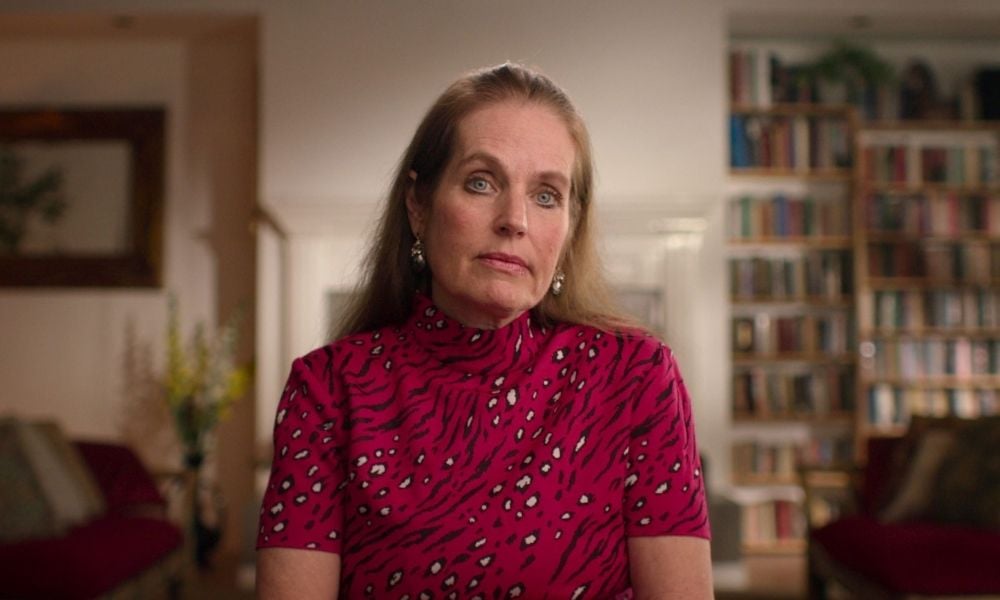
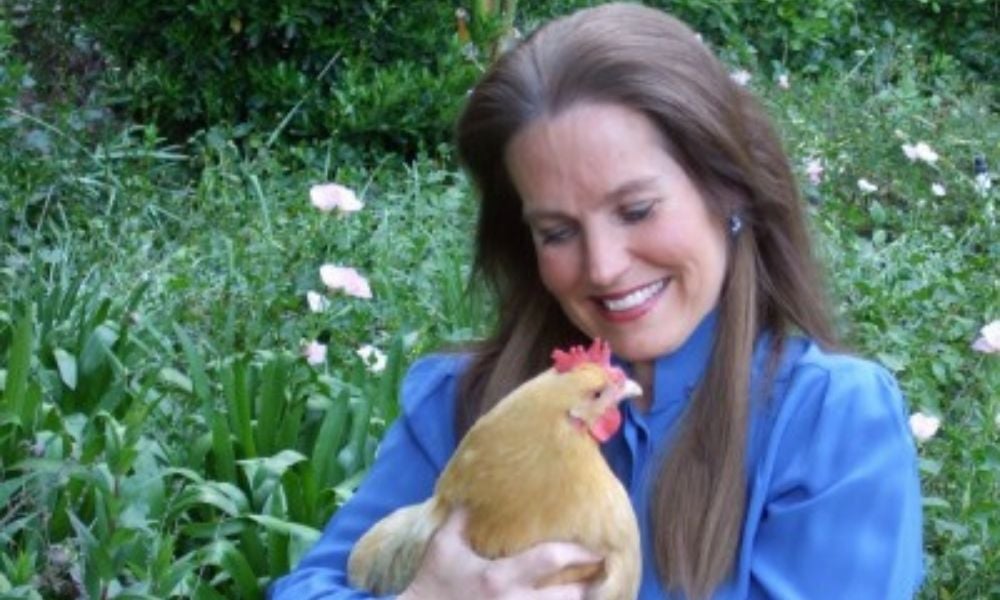
Charlotte Laws has never been easy to categorize. Over the past four decades, she’s worked as a politician, TV personality, writer, actress, academic, and advocate. She also served as an elected official in Los Angeles, where she helped shape the city’s definition of “representation” to include nonhuman animals; worked inside and outside of government to pass pro-animal legislation; and overall has challenged entrenched systems of power in ways most people would never attempt. She has also authored bestselling books, broken national stories as a journalist, and even inspired (and starred in) a Netflix series about her fight against cyber-abuse.
Throughout her work, one thing has remained constant: an ironclad commitment to defending animals.
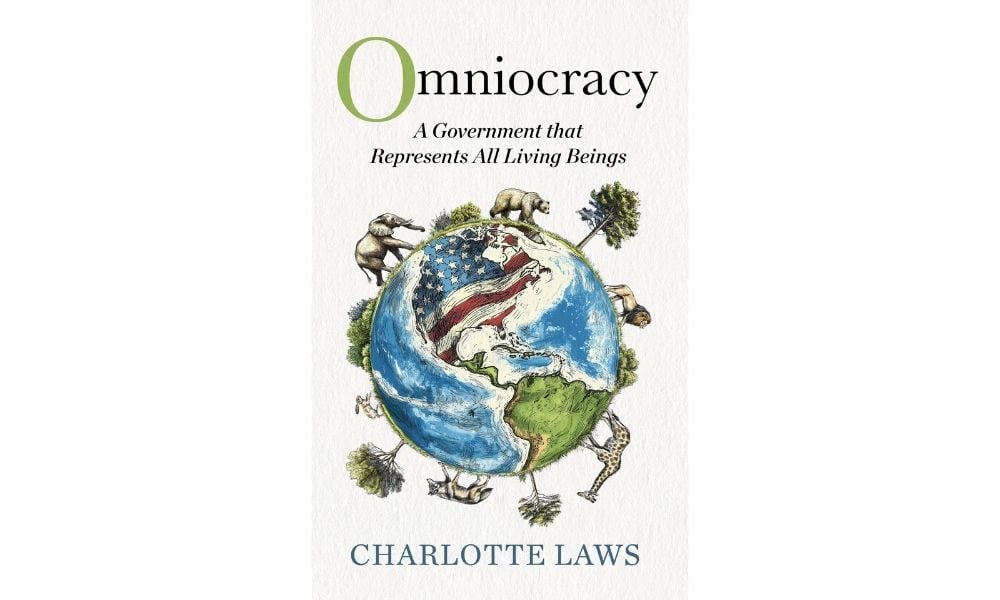
This year, that commitment is expressed in two distinct new books. One is “Omniocracy,” a sweeping work of political philosophy decades in the making, proposing a new ethical foundation for society that rejects moral absolutes and instead grounds moral consideration for all beings in science and policy. In Laws’ view, traditional political systems are inherently prejudiced: they work for humans only, excluding the vast majority of sentient beings. An omniocracy, she argues, would account for all living beings as constituents whose interests must be weighed in the decisions that affect them.
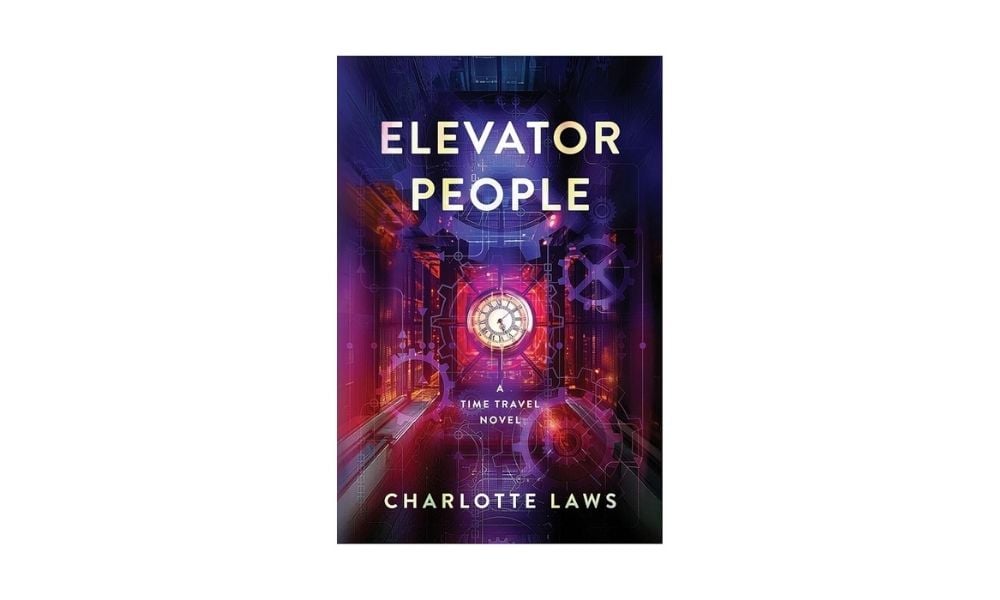
Laws’ second new book of 2025, “Elevator People,” takes a different approach. It is a speculative novel designed to draw mainstream readers in through suspense and world-building, presenting unsettling scenarios that mirror the hidden realities faced by animals in factory farms, laboratories, and captivity. Laws conceived the book very intentionally as a kind of Trojan horse, meant to reach audiences who may never pick up a philosophy text or traditional “animal rights” book. Her ultimate goal with “Elevator People” is to see it made into a movie.
Taken together, these books reflect what Laws has spent a lifetime thinking about: how to reach people where they are. Whether in politics, entertainment, or philosophy, she has learned that change for animals requires multiple strategies — some direct, some subtle — all grounded in empathy, patience, and persistence.
In the conversation that follows, Laws speaks candidly about the making of these books, her decades in activism and politics, why she believes the animal movement has stalled in recent years, the challenges of reaching audiences that don’t keep animals front-of-mind, and the philosophical ideas that keep her going even when the world feels indifferent to animal suffering.
Courtesy of Charlotte Laws
You’re releasing two new books — “Omniocracy” and “Elevator People” — which approach animal issues in very different ways. How did these ideas originate, and did they evolve together?
“Omniocracy” actually began in the mid-1990s. When I was getting my PhD, my dissertation — around 800 pages — was about [17th century philosopher] Baruch Spinoza and the animal rights movement. This book isn’t my dissertation, but the ideas come from that same period. I’ve been working on them for decades. My views didn’t really change, but the last two or three years cemented the final chapters.
I’ve been an animal rights person for a very long time — since around 1981. Even before that, I had the instincts. As a little kid, when my parents were fishing, I’d say, “Why are you murdering fish?” I was always anti-prejudice, always fighting racism or supporting gay rights. Then, when I read Peter Singer and learned about speciesism, I was disappointed in myself for not seeing the connection sooner. That’s when I stopped eating meat.
So “Omniocracy” is really a lifelong project that I finally decided to fully update and complete.
You’ve described “Omniocracy” as a new foundation for the animal rights movement. What sets it apart from existing animal rights approaches?
Unlike most animal rights philosophy, my approach has to comport with science. Right now, the movement relies on free will and absolute morality, and science tells us — based on evidence — that neither exists.
One of the contradictions in the movement is that many people claim humans have free will and nonhumans don’t. They use that to justify why humans can be moral agents and animals cannot. But by making humans “free” and “moral,” you’re placing humans above animals — almost like gods — while simultaneously arguing animals are equal. It’s inconsistent.
Courtesy of Charlotte Laws
My book re-grounds the movement in determinism: cause and effect. The idea that no living beings have free will — so instead of shaming people or declaring them “evil,” we should build a system rooted in policy, law, and science.
Another key part of the book is bringing together the animal movement and the environmental movement, which are often at odds. Environmental philosophy cares about systems and processes, not individuals. Animal rights focuses on individuals. People always say the two can’t be reconciled, but I argue they can, through policy.
Did your experience as an elected official influence how you think about implementing those ideas?
I already held these views before entering politics, but politics taught me how to work with others. You have to compromise. You sometimes support other people’s issues if you want them to support your animal measures.
When I ran for office, I ran on the platform that I was representing all living beings in the district, and not just the humans. And I still won, surprisingly.
I started the Director of Animal Welfare program — DAW — which gave nonhuman animals representation on city councils and neighborhood councils from Lancaster down to San Diego. These were official appointments, so they came with authority and prestige.
Later, I served on a commission tasked with defining “stakeholder” for Los Angeles. It was crucial to me that other living beings be included. Whenever draft definitions excluded them, I objected. I even quietly recruited other commissioners to support that language. The final definition did include them, which was very important to me.
I tried to get other animal people to go into politics, and some of them did run for local councils and got elected. But it’s hard to get animal people into politics. I think they’re very used to wearing jeans and running down the street with the placard and screaming at cars. They’re used to a very different type of thing, and politics is putting on the business suit, and trying not to yell at people, but instead trying to be polite and negotiate with people.
You’ve watched the animal movement for decades. What trends concern you, and what encourages you?
I feel like the movement has lost traction. We were stronger twenty years ago. Veganism has declined. The only real area where I see progress is vivisection. I think we’ve made some strides there.
Animal issues don’t fall neatly along political lines, which is interesting. When Biden was president, Fox News covered animal rights stuff a lot — when they wanted to attack Fauci or Biden. They did whole segments on vivisection and veganism, not because they necessarily cared, but because it helped them politically.
Courtesy of Charlotte Laws
On the left, The Guardian and Vox are probably the strongest on animal issues. On the right, people like Tulsi Gabbard, Ben Carson, and Vivek Ramaswamy have made statements supporting animals. So the issue is still wide open.
But in general, it’s really hard to get the media to cover animals. I’ve tried for so long. They just don’t care.
This brings us to “Elevator People,” which seems designed to reach the mainstream in a totally different way. How did that story come together?
I wrote Elevator People to become a movie. That was always the intent. I wanted something where no animals are harmed or killed, yet the message is completely animal rights. And I didn’t want readers to know that until about 70% into the story.
I wanted regular people — not just animal activists — to read it and only then realize what it’s really about. Throughout the plot, it looks like horrible things are happening to people. At the 70% mark, you realize: this is what animals endure in factory farms and vivisection labs.
I had to figure out how to do this: how to get the message across without depicting harm to an animal, and without broadcasting the theme too early. The book looks like science fiction, so people don’t suspect anything.
Most “animal rights movies” preach to the choir — they’re documentaries that only animal people watch. Others are so on-the-nose that mainstream audiences won’t go near them. If we want to affect culture, we need mainstream art that doesn’t announce itself up front.
Was writing it a free-flowing creative process, or was it guided mostly by the mission?
Oh, it was extremely calculated. I figured out the whole structure first, including how to reveal the twist. There were a few things — especially the ending — that I didn’t know in advance. For example, how to “save all the animals,” or even the idea of characters turning into trees at the end. That came later.
But the core of the story, its mission, and how to mask the theme — those were all intentional from the beginning.
I even tried long ago to write a script about rescuing animals. It never worked because you can’t show animal abuse; people won’t watch it. And I personally refuse to watch any animal harm in films. Sometimes I’ll turn something off over a Thanksgiving turkey on a table! So this approach was the only way to do it.
You’ve worked in entertainment before. Do you see a real path to getting this made into a film?
Netflix wouldn’t do it. They have my show right now — “The Most Hated Man on the Internet” — and I know they’re not interested in animal rights content. So my plan is gate-crashing VIP events.
I want to get the story into the hands of A-list actors and directors who already care about animals — people like Joaquin Phoenix. I mean, you don’t have to pay me one penny — I just want to see the movie made.
I don’t believe that I would get anywhere taking it randomly to some studio. But, you know, there are a lot of people in Hollywood who are animal activists.
You’ve spent decades thinking about what actually moves people. What have you learned about how change happens — for animals and for people?
People don’t want to change their lifestyle. They don’t want to give up luxuries. Culture and tradition are huge obstacles. The left and the right both use them to justify harming animals.
Policies are essential. Laws drive behavior more than moral pleading does. But it’s very hard when the media won’t cover these issues and when people care mainly about the economy.
I talk about this in “Omniocracy.” I think what’s really difficult is that a lot of people on the left will say that culture trumps animal lives, essentially. That’s kind of what it breaks down to. They might say, “We need to be able to eat our culturally relevant foods in order to respect multiculturalism.” And then the people on the right say, “Oh, well, it’s my tradition. My daddy shot deer, and I shot deer, and I’m teaching my kids to shoot deer.” So they both cling to culture and tradition, and how do you get rid of that?
Many people want to help animals but feel like they can’t make a difference. What would you tell them?
Changing one’s diet is the best thing you can do for other living beings, in my opinion. It is a huge step to stop eating meat and dairy — I think that would make the biggest impact. But it’s a difficult problem. I don’t really have an easy solution to it.

Courtesy of Charlotte Laws
I also think it’s important for people to understand what animal people feel every single day. That’s why I wrote the introduction to “Omniocracy” the way I did. I’ve read a lot of animal rights books, and nobody ever talks about what it feels like to be an animal person in a society surrounded by dead animals. I wanted people to understand that emotional reality.
You’ve written about the connection between human and animal suffering, and you also write about determinism. How do these ideas influence your activism?
Believing in determinism helps me. If I believed in free will, I would have to conclude that almost everyone is evil. But science reveals that people don’t have free will. They’re determined — by heredity, by environment. That tempers my anger.
I have always believed in the existence of determinism. Starting when I was 12 or 13 years old, I would replay intense emotional moments and ask myself whether I could have acted differently. I realized I couldn’t have. Then later, I learned that most scientists believe the same thing.
Finding Spinoza was huge for me. His philosophy lines up with mine. He never reached the animal rights conclusion, but he should have. His ideas support it completely.
Even with all this, I still get angry. I hear casual speciesist comments constantly — in movies, on the radio, in TV shows — and it drives me crazy. But then I try to get out of my heart and into my head.
Looking back at your career — from philosophy to politics to activism — what continues to motivate you?
I’ve always wanted to make the world a better place. When I was 12 or 13, sitting with my dog, reading philosophy, I decided that. Later, I read that one-third of people believe they have a mission in life. I guess I was in that third.
My mission is centered on eradicating prejudice. And the most victimized group — the most abused, by far — is nonhuman animals. They have no rights. They’re voiceless.
It’s not easy. I cry when I see animals mistreated. I have trouble traveling because in some countries, the treatment of animals is unbearable to witness. But I try to focus on logic, policy, and what can actually help them.
Finally, what do you hope readers take away from your books and your life’s work?
That nonhuman animals are of equal value, and that prejudice against them is just as real as any prejudice against humans. And that the way forward is through policy, politics, and seeing all living beings as deserving of consideration — not just people.