The Dutch Senate has voted to phase out public funding for experiments involving nonhuman primates at Europe’s largest primate research facility and shift toward human-focused research, according to the NL Times.
Under the amendment, around €12.5 million ($14.5 million) in annual government funding will be redirected from primate research at the Biomedical Primate Research Centre (BPRC) in Rijswijk, Netherlands, to animal-free alternatives through 2030.
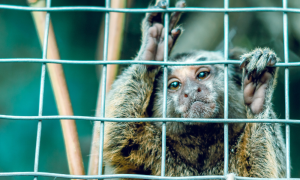
The BPRC confines roughly 1,000 animals and has used monkeys in studies on infectious diseases, Parkinson’s and Alzheimer’s, and the neurological impacts of COVID-19.
Still, the facility’s director has said she will look to private donors or another government ministry for funding.
The decision reportedly follows years of efforts by Dutch policymakers and scientists aimed at cutting animal use and moving toward more humane, modern testing methods. These include innovations like organs-on-chips, organoids (3-D organ models developed from stem cells), and AI tools.
There’s also been a growing global trend toward replacing animal experiments with non-animal models. In recent months, both the United States and the United Kingdom have taken significant steps to support alternative testing approaches.
For advocates across Europe, the Senate’s vote represents an essential moment in the effort to end animal suffering in laboratories and promote science that reflects compassion as well as effectiveness.