The movement to end the dog and cat meat trade is gaining momentum across Asia. Nearly 90% of South Korea’s dog meat farms have now closed ahead of the country’s historic ban taking full effect on February 7th, 2027. Meanwhile, lawmakers in Japan are considering legislation to prohibit the consumption of dog and cat meat amid concerns the trade could shift there as South Korea’s ban approaches.
For Lady Freethinker, the developments offer hope not only for dogs in South Korea, but for efforts to end the trade across the region. They also reflect the approach we already put into practice through PROJECT Sulawesi in Indonesia: Strong laws are essential, but lasting change also requires enforcement, public education, practical solutions, and cooperation with communities and on-the-ground authorities.
After years of campaigning alongside South Korean advocates to expose the cruelty of the dog meat industry and lobbying for its end, seeing these farms close is something we once could only hope for.
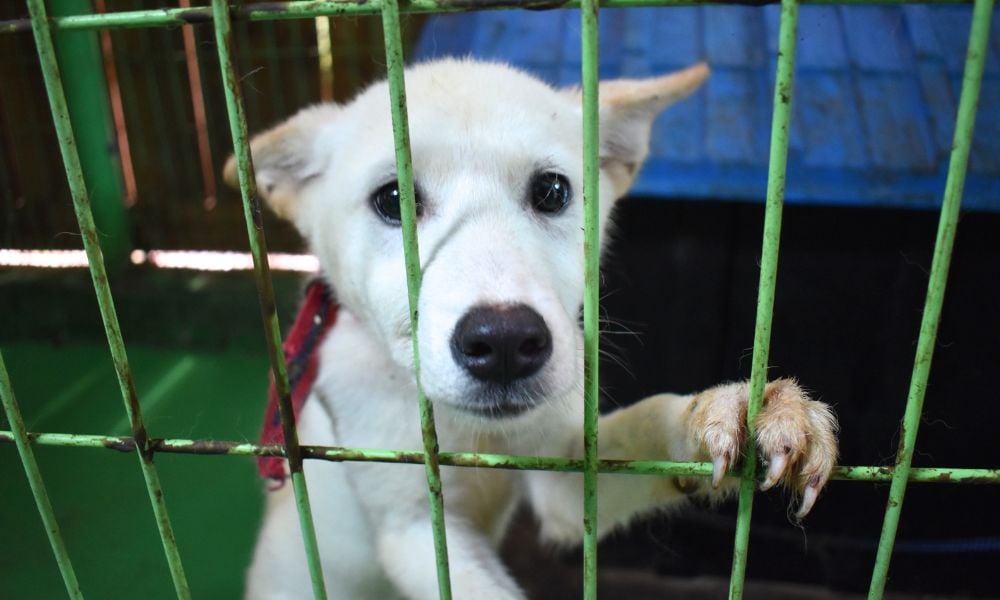
By September 21st, 1,339 of South Korea’s 1,537 registered dog meat farms had closed – around 87% and ahead of schedule. The government has offered financial incentives for early closures, while authorities are inspecting farms to ensure they do not reopen.
The Ministry’s figures also show that an estimated 7,600 dogs remain on farms, a heartbreaking reminder of the final victims of this industry. But there is hope for them, with the government developing plans to protect and care for them, including dogs relinquished by farm owners.
South Korea’s Ban Adds Momentum to Change
With South Korea’s nationwide ban approaching, Japan is considering pre-emptive action amid concerns that the dog meat trade could shift there. While eating dogs and cats is uncommon in Japan, no nationwide law currently bans the practice. The Japan Innovation Party is seeking to change this, with plans for legislation that would ban the consumption of dog and cat meat, as well as their import and breeding for food, before a market has the chance to develop.
Making Laws Work on the Ground
South Korea’s approach reflects what we have also been implementing in Indonesia: Passing a law is essential, but where the dog and cat meat trade is deeply entrenched, legislation alone will not end it. It takes public education, practical solutions, monitoring, enforcement, and cooperation with the people and authorities on the ground.
Putting Laws Into Action in Indonesia
This is at the heart of PROJECT Sulawesi, launched in 2025 by Lady Freethinker with our local partners Jakarta Animal Aid Network and Bali Animal Welfare Association in one of Indonesia’s largest dog and cat meat trade hotspots.
Our investigations exposed the immense scale of the trade across Sulawesi and the suffering of thousands of dogs and cats every month. They were devastating. But they also helped us understand how the trade operates – and where we could intervene.
Working with provincial governments and communities, we have helped secure new regulations, establish checkpoints along major trafficking routes, strengthen enforcement, and support public education. Hundreds of dogs have already been intercepted at provincial borders, while more than 50,000 rabies vaccine doses have been distributed to protect dogs and communities, alongside thousands of educational materials and banners.
The challenges differ from South Korea’s, but the lesson is the same: Laws must work on the ground. That means ensuring they are understood and enforced, while working with communities and authorities on practical solutions that reflect the realities of the trade.
We have much bigger plans for 2027, building on this work to protect more dogs and cats and push the trade further towards an end.
None of this progress would be possible without our supporters. Thank you for standing with us – and please stay with us as we keep fighting for a future where no dog or cat suffers for the meat trade.