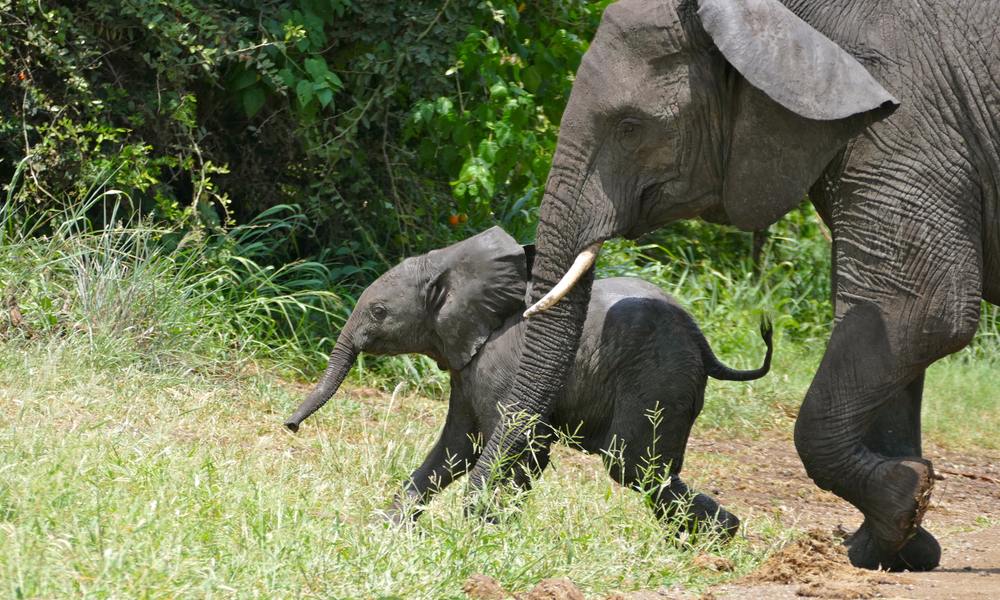
Wild African elephants in Kenya may know which plants to seek out when they feel sick — and mothers may even prepare plant medicine for their calves, according to a new study shaped by Indigenous knowledge.
Researchers spoke with eight experts from the Sabaot Indigenous community in the Mount Elgon region, including wildlife scouts, elders, guides, and a retired ranger. Each had observed the area’s elephants for more than 20 years and knew the community’s traditional plant medicines.
The experts identified 35 plant species that elephants may use as medicine. For eight of those plants, witnesses connected the elephants’ choices to a specific health need or described mothers giving the plants to calves.
One wildlife scout described elephant mothers chewing Angurweet leaves with roots from other plants, mixing the softened material with their milk, and feeding it to their calves. The calves then reportedly chewed the mixture before spitting out the solids. Sabaot people use Angurweet to treat ailments including stomachaches.
Other accounts linked a type of aloe with increasing calves’ appetites and several Dombeya plants with easing digestive problems. Elephants who appeared lethargic were also seen eating Kuloa usambarensis.
These observations offer promising clues, but researchers still need to follow individual elephants over time and test whether the plants have the suspected medicinal effects. To gather more evidence, local wildlife experts have now been given cameras to document these behaviors, while scientists are analyzing the plants.
“Local knowledge has given us a map,” lead researcher Dr. Fabien Schultz told BBC News.
The findings also underscore the importance of protecting Mount Elgon’s forests, which could help preserve the plants elephants may need.
Lady Freethinker is grateful for this study, which sheds new light on elephants’ remarkable intelligence and the ways they may care for themselves and one another.