A brown pelican tangled in fishing line showed up at exactly the right door. The bird walked up to a National Oceanic and Atmospheric Administration fisheries laboratory in Panama City, Florida, and repeatedly tapped their beak against the glass entrance. Just 10 minutes later, the injured animal was free and back in the sky.
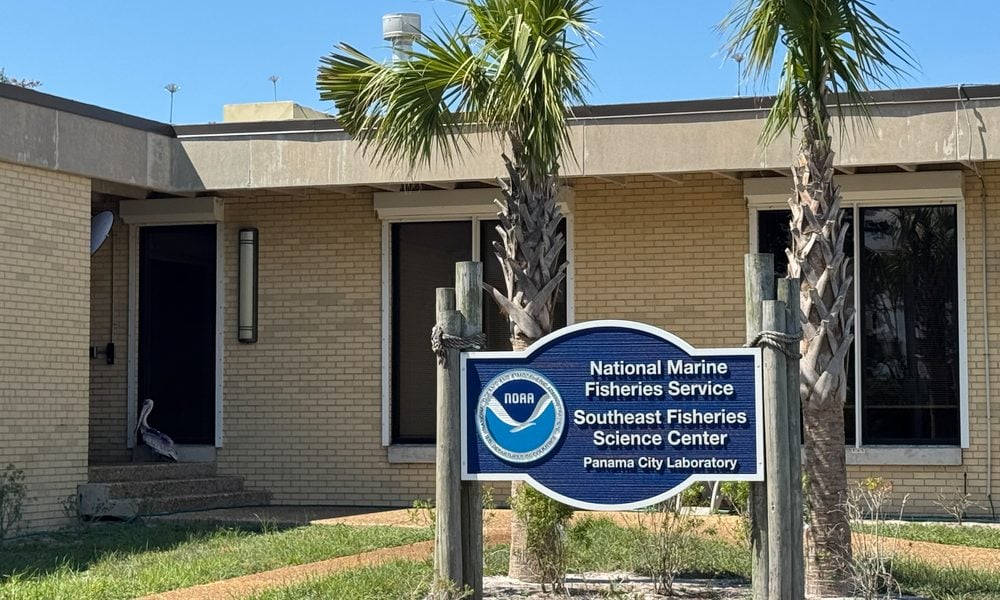
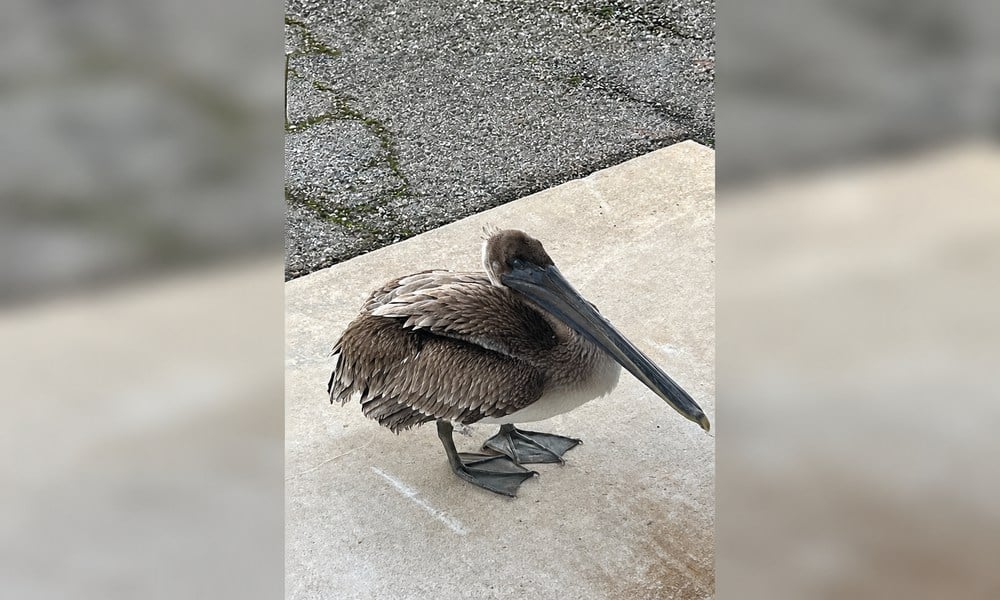
Brown Pelican Waiting at NOAA’s Panama City Laboratory (Photo Credit: Ty Jones/NOAA Fisheries)
The pelican “seemed to be looking for help,” NOAA Fisheries wrote in its official account of the rescue.
Biologists heard the tapping while they were working inside. When they opened the door, they found heavy fishing line wrapped around the bird’s wing, a double-barbed treble hook embedded in the right wing, and cactus spines in the left foot.
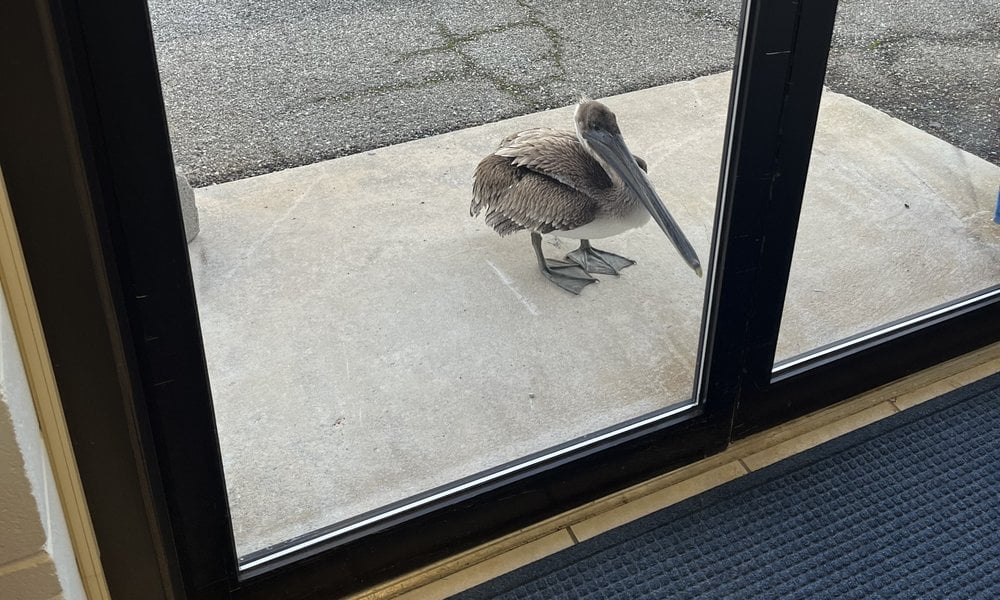
Brown Pelican Waiting Outside the Laboratory’s Back Door (Photo Credit: Albert Gabel/NOAA Fisheries)
While the team usually works with sharks and sawfish, their steady hands were just what this unexpected visitor needed. They carefully restrained the pelican, snipped the hook’s barb, removed the hook, unspooled several feet of line, and pulled out the spines.
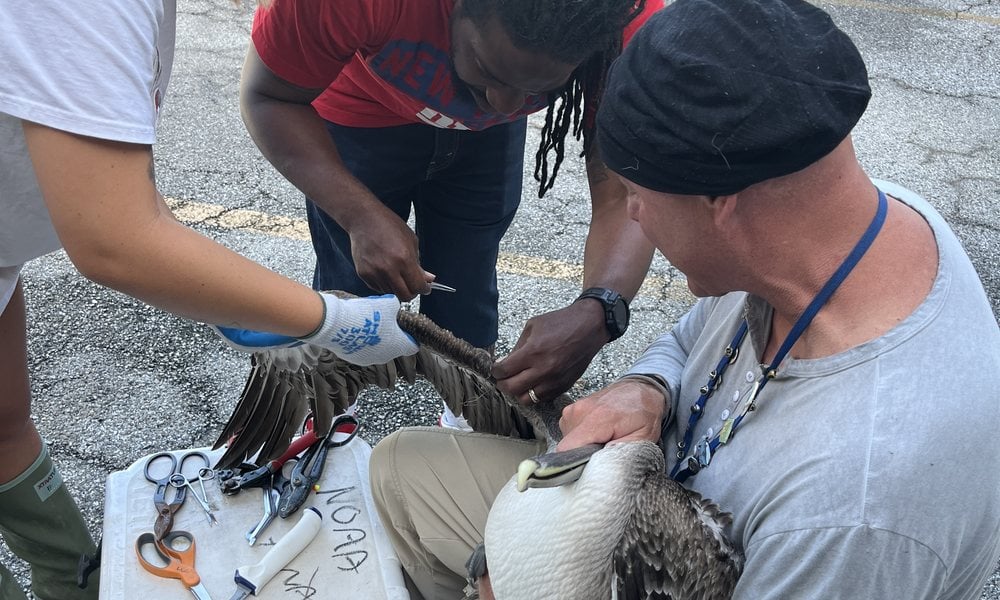
NOAA Fisheries Staff Remove a Hook From the Injured Pelican (Photo Credit: Michelle Duncan/NOAA Fisheries)
The bird stayed calm throughout the rescue and, after a final check by the biologists, flew away free of the hook and line.
This story is a great reminder of the inherent, and unnecessary, danger of discarded fishing line and hooks. Delicious plant-based options exist that make angling obsolete. While pelicans may need to eat fish to survive, humans certainly do not.
Lady Freethinker celebrates this pelican’s safe return to the sky and thanks the NOAA Fisheries team for answering one very unexpected knock.