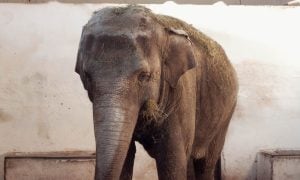
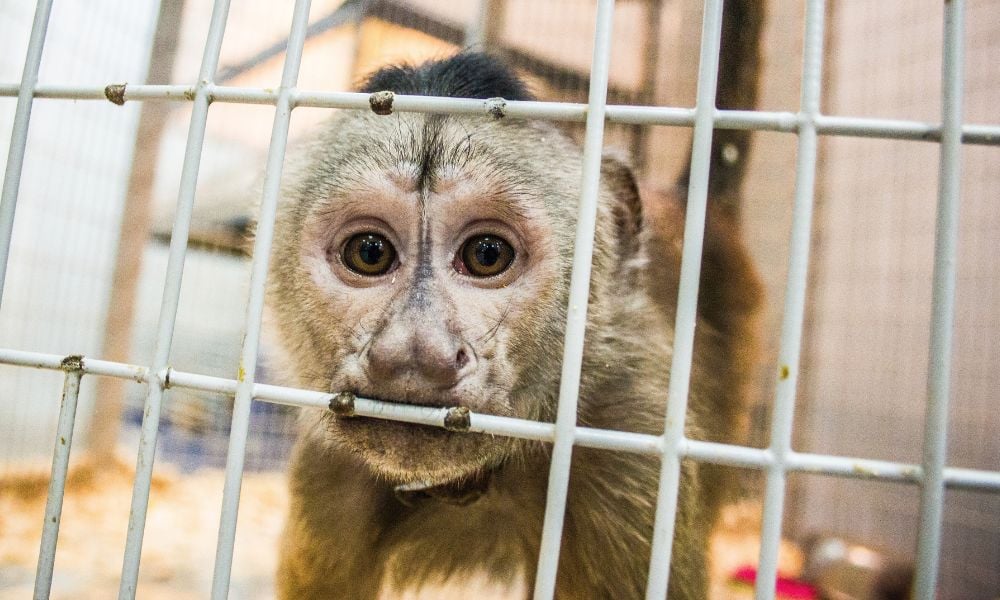
Hundreds of nonhuman primates and more than one million horseshoe crabs could be spared from drug testing each year under federal efforts that also include the closure of the National Institutes of Health’s last in-house beagle laboratory.
The U.S. Department of Health and Human Services has launched more than 20 actions across its agencies to reduce animal testing. Among them is a direct final rule issued by the U.S. Food and Drug Administration that removes language suggesting animal testing is the only acceptable way to produce safety data for drugs used in humans.
The rule replaces ‘animal tests’ and ‘animal studies’ with the broader terms ‘nonclinical tests’ and ‘nonclinical studies.’ This clarifies that drug developers can use validated methods involving human cells, organs-on-chips, and computer models when appropriate for the drug and the questions being investigated.
Unfortunately, the updated FDA rule still allows animal testing, and drug developers may continue using animals in safety studies.
Beyond the FDA rule, other actions could help animals leave laboratories for good. NIH now allows grant money to help retire or rehome research animals, while the Centers for Disease Control and Prevention is reducing the number of animals in its laboratories and pursuing permanent sanctuary placement for healthy nonhuman primates.
To further support the shift away from animal testing, NIH is investing more than $88 million in biomedical research infrastructure and developing a laboratory centered on lab-grown human organ models.
Lady Freethinker welcomes these changes and urges federal agencies to keep expanding humane, human-based research until no animals are used in experiments.