Hidden beneath leaf litter, loose sand, and limestone across South Florida, three tiny reptiles have survived largely beyond human sight. Now, as development and rising seas close in on the few places they call home, they are gaining federal protection.
The Key ring-necked snake and rim rock crowned snake, along with the Florida Keys mole skink, will be listed as endangered under the Endangered Species Act beginning August 20, 2026. All three already receive protection under Florida law, but the federal listings bring broader safeguards and a path toward recovery.
The Key ring-necked snake lives on just seven islands in the lower Florida Keys. Adults measure about 6 to 10 inches and spend much of their lives beneath leaf litter or underground. Yellow, orange, and red form a vivid pattern along the underside of the snake’s otherwise dark body, but people rarely see the coloring because the animal is so secretive.
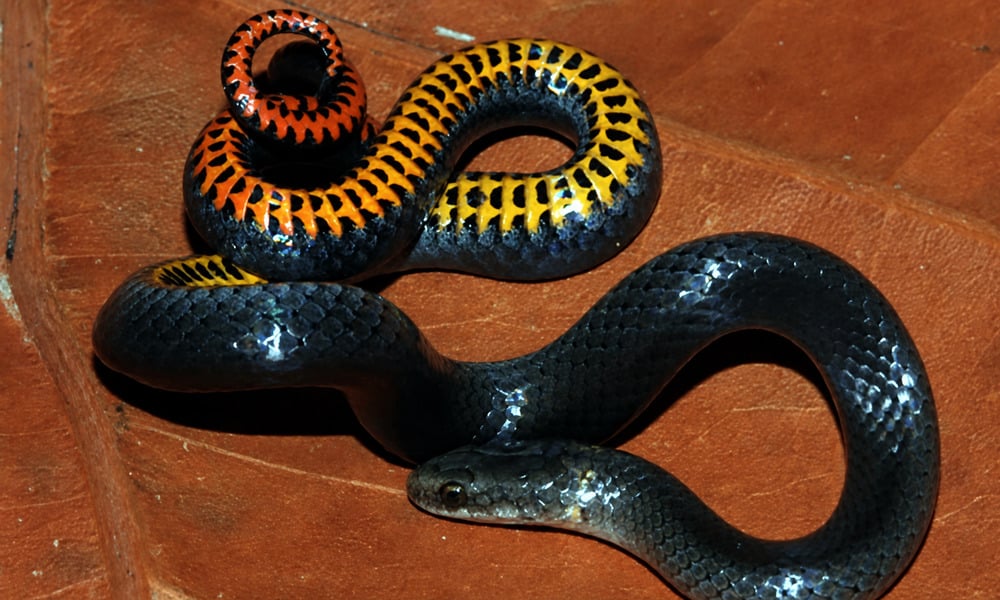
Key Ring-Necked Snake (Photo Credit: Keith Enge/FWC)
The rim rock crowned snake grows roughly 7 to 9 inches and survives in scattered pockets of Miami-Dade County and the Florida Keys. Like the Key ring-necked snake, this elusive animal spends much of their life hidden in shallow soil, limestone crevices, and leaf litter, making population counts difficult.
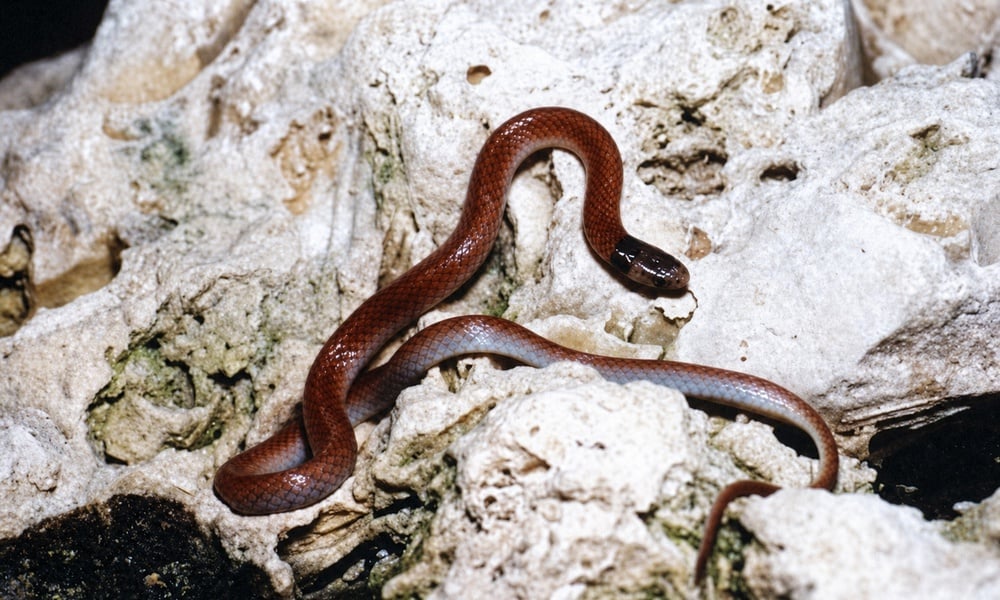
Rim Rock Crowned Snake (Photo Credit: Dustin Smith/FWC)
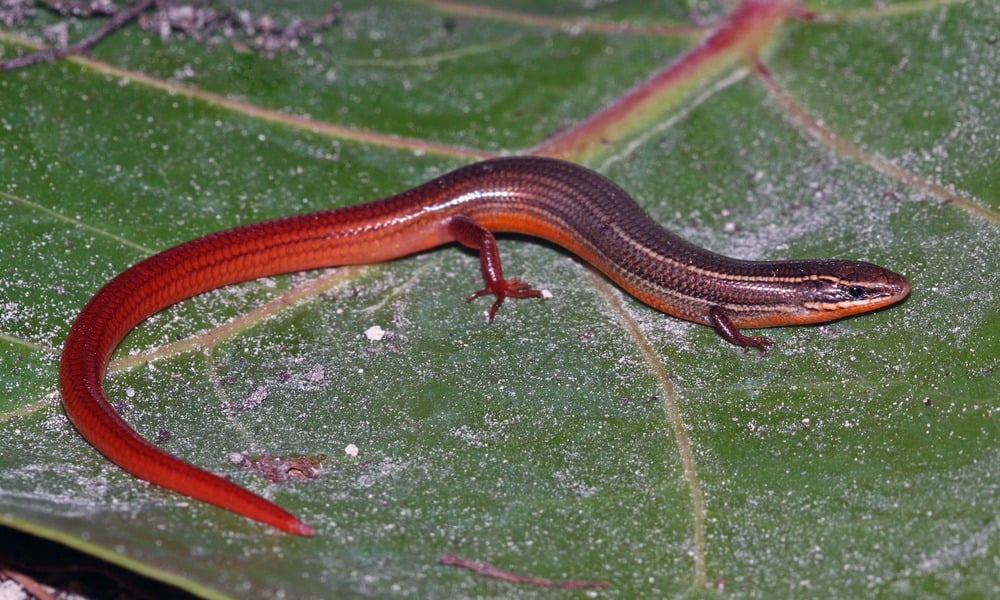
At no more than five inches long, the Florida Keys mole skink could disappear beneath a single leaf. Its slender tan body ends in a vivid pinkish-red tail, a flash of color as the tiny lizard moves through loose sand. Since 2000, scientists have documented only 205 individuals across 15 islands, though those sightings are not a total population estimate.
The three reptiles rely on a patchwork of low-lying habitat. The snakes depend on pine rocklands and rockland hammocks, while the skink also uses beaches, dunes, and coastal berms. In South Florida, a rockland hammock is a dense tropical hardwood forest growing where limestone lies close to the surface. Shade, loose soil, and leaf litter create the cool cover these animals need. Development and habitat fragmentation have reduced these areas, while fire suppression alters open pine habitat and rising seas, saltwater intrusion, high-tide flooding, and stronger storms threaten the Keys.
Scientists do not know how many remain because all three reptiles spend much of their lives hidden. All three are found nowhere else on Earth, WLRN Public Media reported.
On these low-lying islands, dunes, hammocks, and pine rocklands provide the shelter, food, and space these animals need to survive. Federal protection gives these reptiles a better chance, but no law can replace the habitats that sustain them. Protecting these places will help keep three of Florida’s quietest residents part of its wild.
For another Florida wildlife protection update, read about Florida’s stronger safeguards for threatened marine wildlife.