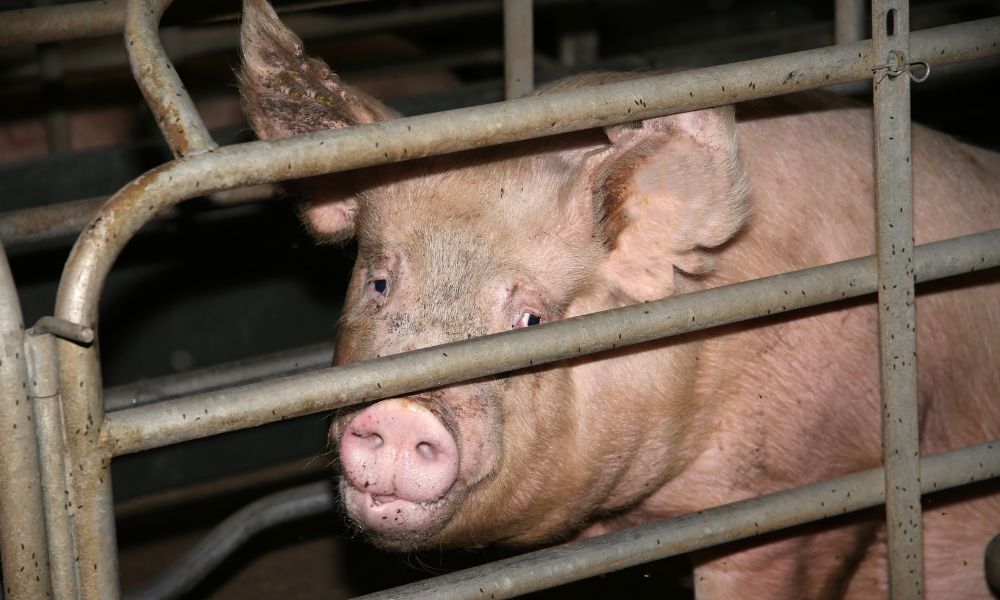
Factory farms aren’t just cruel — they’re the world’s biggest food-wasters. According to a new report from Compassion in World Farming, industrial animal agriculture squanders more edible grain than any other form of food waste — fueling deforestation, hunger, and a climate crisis we can’t afford to ignore.
The report found that factory farms waste 766 million tons of grain each year by feeding it to animals, which exceeds the quantity of food discarded by households, restaurants, or supermarkets.
However, this figure isn’t even a measure of all the grain fed to animals, but rather reflects the inefficiency of converting plant nutrients into animal products, since the process yields only 3 to 25 calories of meat for every 100 calories of edible grain fed to animals.
Soy is also primarily used to feed animals in industrial farms — making up over three-quarters of global production — while just 6% goes toward producing food for people.
The environmental impact of this inefficient system is shocking. Feed crops alone account for 98% of the water footprint of meat and dairy production, and nearly 45% of the world’s arable land is used to grow food for farmed animals. Soybean production, in particular, ranks as the second-largest cause of tropical deforestation.
As if that weren’t alarming enough, a Compassion in World Farming study found that if the farmland now devoted to growing grain for animal feed were instead growing food for people, it could feed 2 billion more humans each year. Further, if all arable land used for grain-feed went to human food crops, the U.S. alone could feed an additional 287 million people each year.
And this doesn’t even account for the expanded use of harmful fertilizers and pesticides to grow these crops, additional greenhouse gas emissions, loss of biodiversity, displacement of communities, enormous subsidies for animal feed, and the likelihood that all these problems will only intensify as the world’s population grows.
Of course, adopting a plant-based diet is a vital step toward building a more ethical and sustainable food system, but the report also recommends feeding farmed animals grass, food by-products humans can’t eat, crop residues, and safe food waste.
It further calls for several policy changes, including ending subsidies for grain and soy used as animal feed, educating the public about the waste and environmental devastation caused by feeding these crops to animals, and prioritizing productive farmland for human food production.
Lady Freethinker is grateful to Compassion in World Farming for exposing the immense waste, environmental toll, and threat to global food security caused by industrial animal agriculture — and hopes governments worldwide will take meaningful action to address this urgent crisis.
LFT encourages everyone to explore the healthy and delicious plant-based options available today, not only to save animals from the shocking cruelty of factory farming, but to sustain the environment and humankind.